Comparing NASA's view of the Sun from space to the view from my front yard.

Comparing NASA’s view of the Sun from space to the view from my front yard.

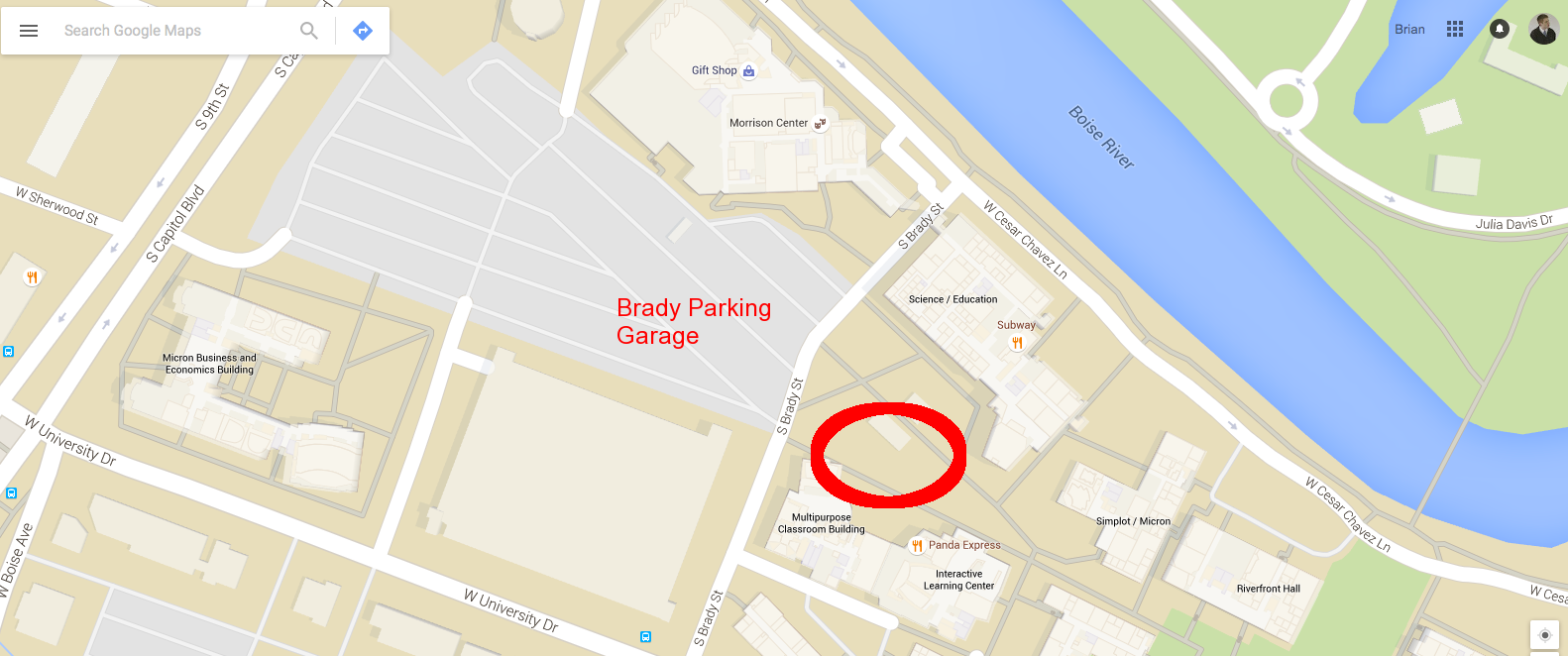
In preparation for the Mercury transit event on Monday, I set up one of our telescopes with a solar filter to see what the Sun looks like. The image above is a comparison of what I can see from my front yard to what NASA’s Solar Dynamics Observatory saw a few hours ago.

Looks like we’ll have a tiny Sun spot present for the transit on Monday, and the weather forecast is looking better. So fingers crossed for good conditions.

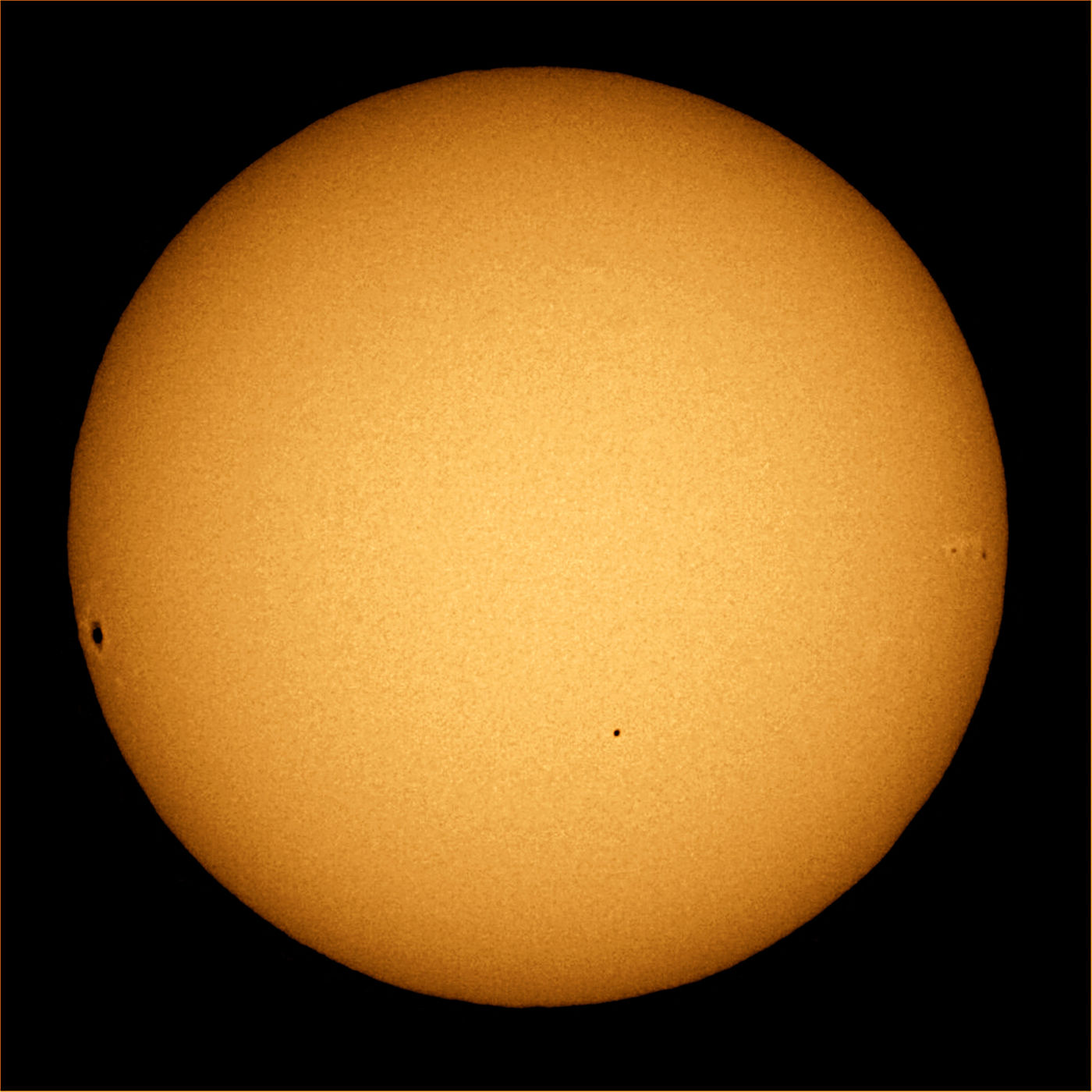
A snapshot of the November 2006 transit of Mercury. The rocky planet appears as a clean-edged disc in the lower hemisphere of the sun. Clusters of sunspots can also be seen near the right and left edges of the sun. From http://www.space.com/32758-mercury-transit-sun-2016-rare-event-may9.html.

A snapshot of the November 2006 transit of Mercury. The rocky planet appears as a clean-edged disc in the lower hemisphere of the sun. Clusters of sunspots can also be seen near the right and left edges of the sun.
From http://www.space.com/32758-mercury-transit-sun-2016-rare-event-may9.html.

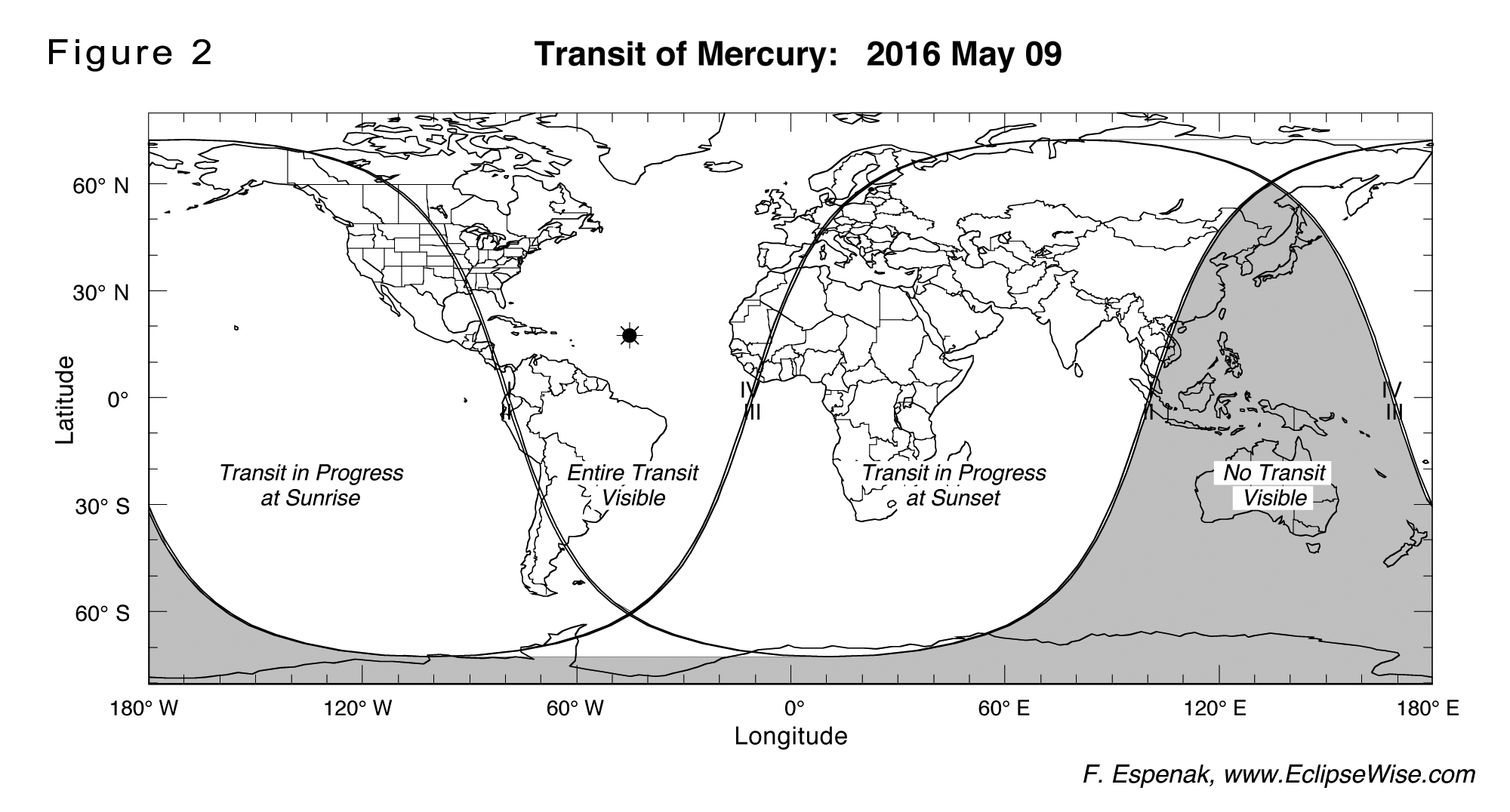
An event that only occurs 13 times a century, the planet Mercury will transit the Sun in the morning of May 9, meaning the planet will pass between the Earth and Sun and cast a shadow we can see, as in the photo at left.

The Physics Department at Boise State University will host a viewing event on campus in the plaza next to the physics building (Multi-Purpose Classroom Building) from 9am till 1pm. Paid parking is available in the Brady Parking Garage across the street from the event.

We will have telescopes with Sun-safe filters and eclipse shades to share so the public can watch this rare celestial occurrence.

Here in the Pacific Northwest, the transit will already have begun by the time the Sun rises, but it will last until about 1pm.

So bring the whole family for this rare celestial event — the next one won’t happen until 2019.

UPDATE: We will also project a live feed from NASA’s Solar Dynamics Observatory in the lobby of the Physics Building.

Raising_Super-EarthIn the three years since my daughter was born, the one lesson I’ve managed to wrench for the morass of toddler tantrums and sleepless nights is that, like all people, children are complicated and no two are exactly alike. However, decades of childhood development studies have shown at least one interesting (if sad) commonality — stress during childhood can stunt a child’s mental (and even physical) growth.

Like our understanding of child development, our understanding of the formation and evolution of planets, from the largest gas balls to the smallest icy specks, is still in its infancy. And the bewildering variety of exoplanets discovered in recent years has challenged even the fledgling comprehension we once had.

Particularly puzzling is the class of exoplanets known as sub-Neptunes or super-Earths. These planets are somewhere between the Earth and Neptune in size, many rich in hydrogen and helium. Even though they seem to be the most common type of planet in our galaxy, how they form is still an open question.

We understand a little better, though, how they grow up, and a recent paper by Chen and Rogers develops a new model to track the evolution of super-Earths after they form, as the planets age over billions of years.

The study applies this new model to investigate how we can use the size of a super-Earth to determine what the planet’s made out of. Normally, you’d need at least a planet’s mass AND size to constrain its composition, but several recent studies, including Chen and Rogers’s, show that the size of a super-Earth is mostly sensitive to the mass of its atmosphere — add just a little atmosphere to a super-Earth, and its radius blows up a lot. This result is hugely useful since most exoplanets only have their radius, not their mass, measured.

Chen and Rogers also explore the effects of atmospheric loss on super-Earths. Many known exoplanets are so close to their host stars that they are actively losing their atmospheres to space. Chen and Rogers show that this mass loss can completely remove the atmospheres of a very small super-Earth and remove a lot of the atmosphere from a large super-Earth, like childhood stress, leaving the planet stunted.

The upshot is that super-Earths with atmospheres that are small but not too small (about 1% of the planet’s mass) preferentially retain the atmosphere. Consistent with other studies, this result helps explain the otherwise puzzling frequency of super-Earths with smallish atmospheres.

In this age of open-source code, Chen and Rogers plan to make their model publicly available. So soon anyone will be able to raise a super-Earth from adolescence into adulthood and finally senility.

 

IMG_3738

Yesterday, we in the Physics Dept. hosted a discussion panel for our undergrads about graduate school — how to decide where to go, how to apply, what to do when you’re there, etc. The panel comprised folks involved, enrolled, or formerly enrolled in graduate school, including Sheenah Bryant, Vince Isakson, Kinzi Poteet, and Fan Ming. Lots of good questions, discussion, and presentations (which I’ve posted below).

Thanks to Megan Boatman in Boise State Career Services for her help organizing.


parentology_coverAs a way to spur myself to read more, I’ve decided to start writing short blog posts about books once I’ve finished them. This will also help me keep track of what I read (I usually forget within a few weeks). Just yesterday, I finished another book (next up: Goodwin‘s The Bully Pulpit!), and here are my thoughts, FWTW.

Since my daughter was born a few years ago, I’ve tried to educate myself a bit on the science of parenting and have encountered several books on the subject. Unfortunately, a lot of them are filled with platitudes and anecdotes, not a lot of hard science. However, at some point last year, I came across Dalton Conley‘s Parentology.

It’s definitely not a parenting-how-to book, but it’s full of scientifically informed insight and humor about the author’s personal experience raising his children. Conley draws on the latest sociological, genetic, and economic research, as well as his own scientific work, to paint a picture of the current understanding of child development and the role parents play.

Although Conley sometimes discusses elements of his own life story that aren’t directly relevant to the narrative, mostly his personal experiences serve to color and illustrate the research discussed. As a professional scientist myself, his fearless approach to parenting really resonated with me, and I especially appreciated that he didn’t fill his book with fluff.

Endolithic ("within-rock") life. From http://d32ogoqmya1dw8.cloudfront.net/images/microbelife/extreme/endoliths/cryptoendolith.jpg.

Endolithic (“within-rock”) life

Today, in physics, we hosted Prof. Nancy Chanover of New Mexico State Astronomy for our departmental seminar. Chanover gave a fascinating talk on her work developing acousto-optical tunable filters (AOTFs) to look for life in exotic terrestrial environments and on Mars.

AOTFs involve the application of an oscillating radio signal to a birefringent crystal. By applying the right frequency to the crystal, the crystal can be made to filter out light of very specific colors. Measuring the filtered light that comes out allows one to measure the colors of a object — is there more red light that filters through than blue, for instance?

One big advantage of these AOTFs is that they can produce spectra of rocks, minerals, anything that is colored, without any moving parts, and no moving parts is a big plus when you send an instrument to another planet.

In her talk, Prof. Chanover discussed her group’s work to develop AOTFs and techniques to analyze the emergent spectra and identify minerals on planets or moons in our solar system. Different minerals can have distinctive colors, and so taking the spectrum of a Mars rock, say, could allow us to identify its composition, without having to vaporize the rock to chemically analyze it.

The same technique could be used to look for Martian life. In some cases, extremophiles on the Earth leave tell-tale coloration in rocks (see figure at left), and so Martian life (if it exists) might do the same. Prof. Chanover’s group is looking for the distinctive spectral signatures of terrestrial biota in hopes of sending an AOTF to Mars and looking for life there, particularly in caves, which might be especially hospitable for life.

As a precursor to exploration of Martian caves, Chanover discussed her work attaching an AOTF to a robot developed by the Jet Propulsion Lab that climbs walls using footpads inspired by geckos, a LEMUR. This project involved several unforeseen challenges — as she said, on one trip, she struggled to say “acousto-optical tunable filter” in Spanish to a dubious Mexican border guard on the way to a field site in Mexico. The life of a planetary scientist.

OsherPagesTopPic2015I gave a talk at Boise State’s Osher Lifelong Learning Institute on exoplanets generally and my group’s research specifically.

The crowd was really amazing. Despite my being delayed by a flat bike tire, there was an enormous group of enthusiastic astrophiles waiting for me when I arrived.

We toured the night sky briefly using the stellarium program, a free (but please donate) and open-source night sky simulator available here — http://stellarium.org/.

I made quite a long talk to fill the two-hour scheduled slot, but there were so many interesting questions, I barely made it halfway through. I’ve posted my abstract and presentation below in case there’s any interest.
—

The Exoplanet Revolution

The discoveries of hundreds of planets outside our solar system, called exoplanets, have led to a renaissance in astrophysics and revolutionized every sub-discipline within planetary astronomy. The vast array of new planets strains imagination, and even after two decades of discovery, exoplanets pose a host of astrophysical riddles. In this presentation, I’ll describe how these distant worlds have revised our picture of planet formation and evolution. I’ll also discuss outstanding questions in planetary astrophysics and prospects for observational work, including the TESS mission, selected by NASA for a 2017 launch to find more, nearby planets.