tidal decay

All posts tagged tidal decay

Some planets in other solar systems orbit so close to their stars that they are spiral inward, ultimately to be ripped apart and eaten by their stars.

Looking for signs of that in-spiral, many astronomers, including students in my own research group, study transit signals — the shadows of planets as they pass in front of their host stars, as seen from Earth. For a planet spiral into its star, the time between one transit and the next will get shorter and shorter over many years. And so by measuring many transits, we can find signs of tidal in-spiral.

One big problem with looking for such tidally-driven signals is that other effects can also effect the time between transits, and so we need a good way to distinguish between these different effects.

In a recent paper from our group, we map out some ways to tell the difference between these different effects using tides. The bottom line: it’s not easy to tell the difference, but observations of exoplanet transits by citizen scientists can be a really important tool for the long-term monitoring required to find tidally decaying worlds that are not long for this world.

Related Publications

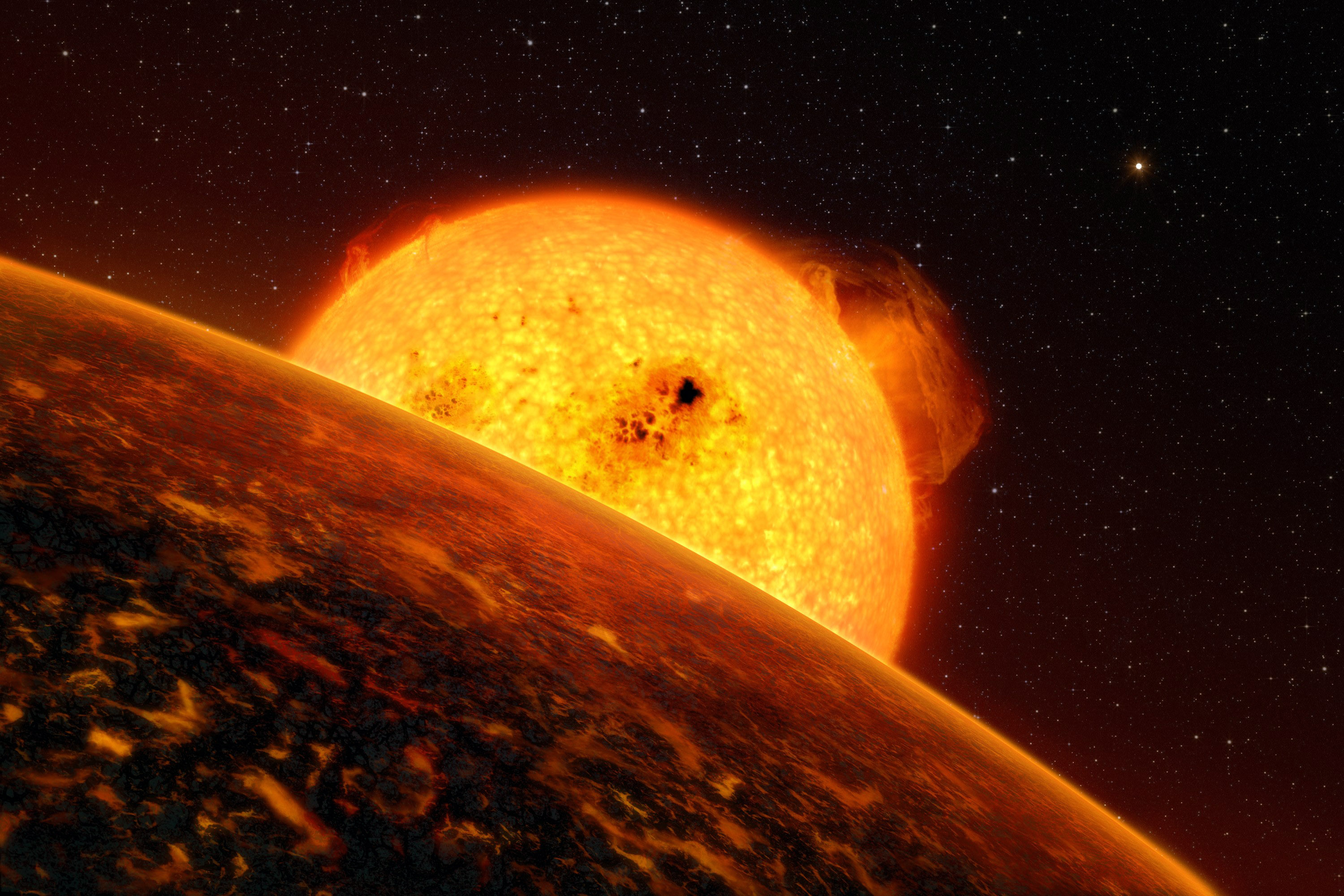
An artist's conception of CoRoT-7 b.
An artist’s conception of CoRoT-7 b.

CoRoT-7 b was the first confirmed rocky exoplanet and was discovered by the CoRoT mission, but, with an orbital from its host star of only 0.0172 AU (100 times closer than the Earth is to the Sun), its origins may be unlike any rocky planet in our Solar system. In Jackson+ (2010), my colleagues and I considered the roles of tidal evolution and atmospheric mass loss in CoRoT-7 b’s history, which together have modified the planet’s mass and orbit. If CoRoT-7 b has always been a rocky body, evaporation may have driven off almost half its original mass, but the mass loss may depend sensitively on the extent of tidal decay of its orbit. As tides caused CoRoT-7 b’s orbit to decay, they brought the planet closer to its host star, thereby enhancing the mass loss rate. Such a large mass loss also suggests the possibility that CoRoT-7 b began as a gas giant planet and had its original atmosphere completely evaporated. In this case, we found that CoRoT-7 b’s original mass probably did not exceed 200 Earth masses (about two-third of a Jupiter mass). Tides raised on the host star by the planet may have significantly reduced the orbital semimajor axis, perhaps causing the planet to migrate through mean-motion resonances with the other planet in the system, CoRoT-7 c. The coupling between tidal evolution and mass loss may be important not only for CoRoT-7 b but also for other close-in exoplanets, and future studies of mass loss and orbital evolution may provide insight into the origin and fate of close-in planets, both rocky and gaseous.

Related Press:

Related Scientific Publications:

  • Jackson+ (2010). “The roles of tidal evolution and evaporative mass loss in the origin of CoRoT-7 b.” MNRAS 407, 910.
  • Jackson+ (2010). “Is CoRoT-7 B the Remnant Core of an Evaporated Gas Giant?” BAAS 42, 444.

Many gaseous exoplanets in short-period orbits are on the verge or are in the process of Roche-lobe overflow (RLO). Moreover, orbital stability analysis shows tides can drive many hot Jupiters to spiral inevitably toward their host stars.

In this study, we showed that the evolution is largely determined by the core mass of the overflowing gas giant and that the orbital expansion that accompanies RLO often stops and reverses at a specific maximum period that depends on the core mass.

We suggest that RLO may often strand the remnant of a gas giant near this orbital period, and we conduct a preliminary comparison of this prediction to the observed population of small, short-period planets and find some planets in orbits that may be consistent with this picture (shown in the above figure).

To the extent that we can establish some short-period planets are indeed the remnants of gas giants, that population can elucidate the properties of gas giant cores, the properties of which remain largely unconstrained.

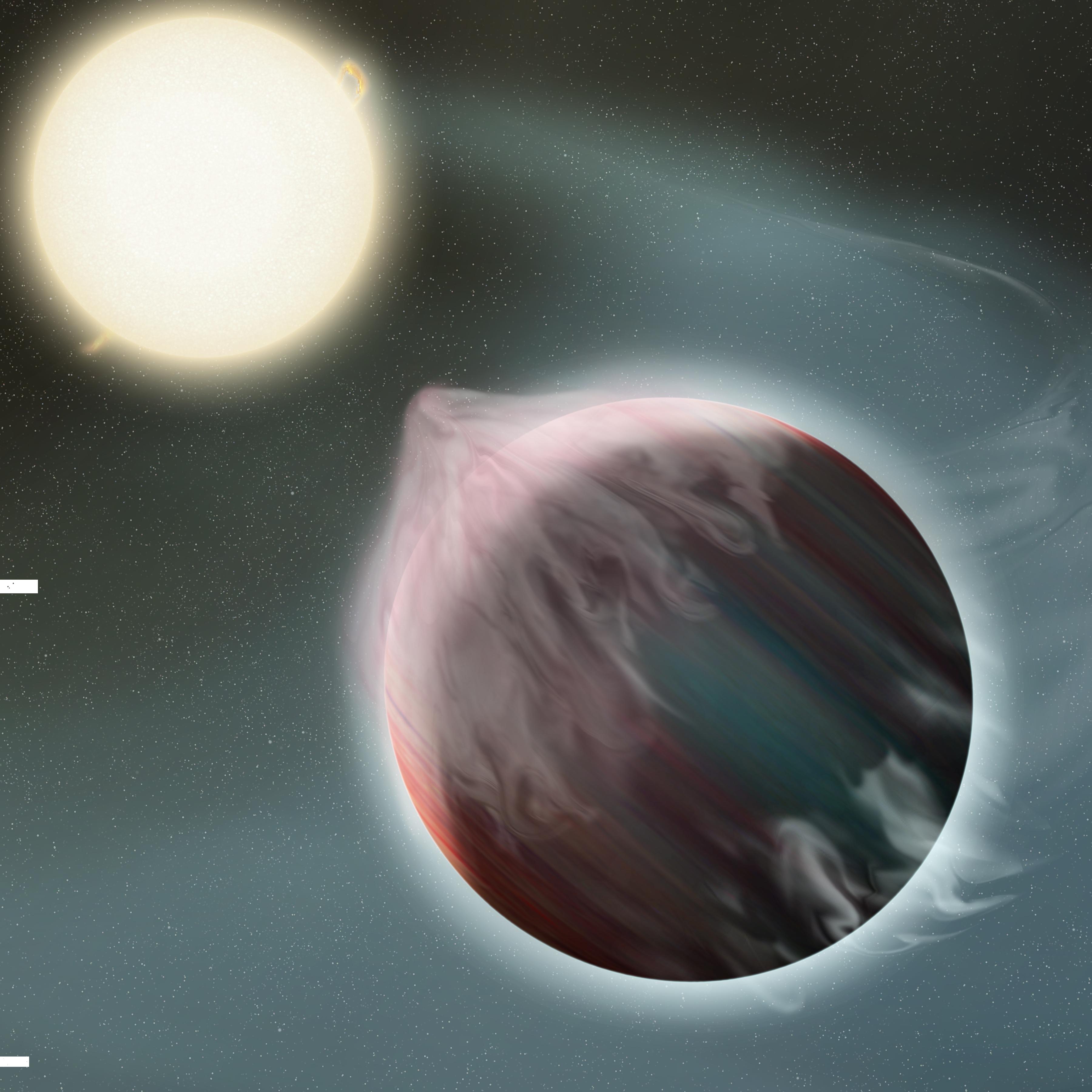
Artist’s conception of a hot Jupiter shedding mass.

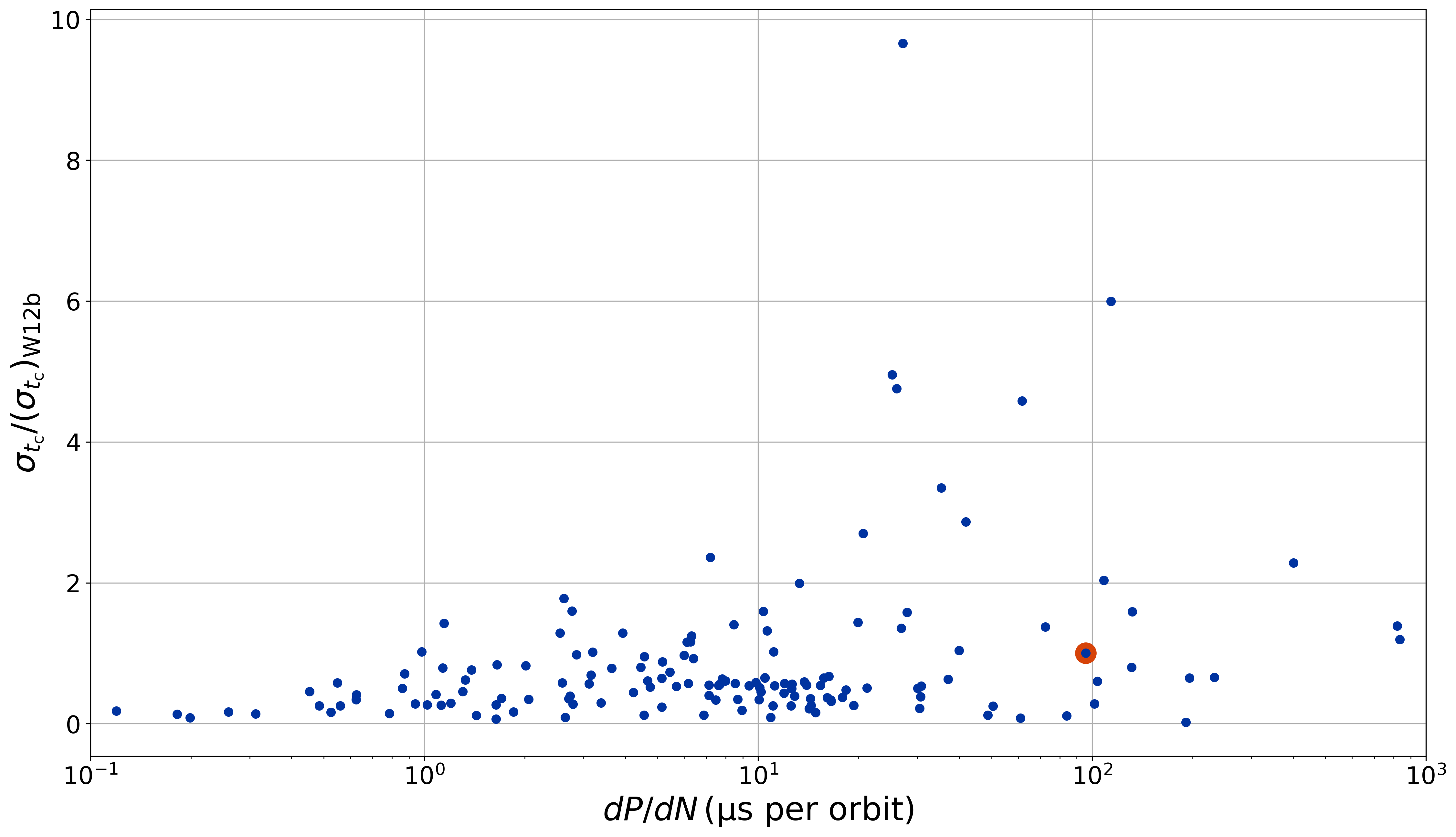
Tidal interactions between short-period exoplanets and their host stars drive orbital decay and have likely led to engulfment of planets by their stars. Precise transit timing surveys, with baselines now spanning decades for some planets, are directly detecting orbital decay for a handful of planets, with corroboration for planetary engulfment coming from independent lines of evidence. The large number of possible targets (hundreds of planets) means it is not feasible to continually observe all planets that might exhibit detectable tidal decay. For this work, we explored the properties of an exoplanet system that can maximize the likelihood for observing tidally driven transit timing variations.

Research Publications

  • Jackson et al. (2023) “Metrics for Optimizing Searches for Tidally Decaying Exoplanets.” Astronomical Journal.
Artist’s conception of a hot Jupiter shedding mass.

Though worlds in our Solar System have been rocked by geological upheavals, mountain-shattering impacts, and climatic disasters throughout their histories, we think they have remained essentially intact. The planets we see today have been here since they first coalesced 4.5 billion years ago. But that long-lived stability may be the exception and not the rule. Indeed, astronomers now know many planets face destruction through what’s called tidal disruption, and recent searches have revealed direct evidence of the final moments for these doomed worlds.

Continue Reading