Brian Jackson

Professor of Physics at Boise State University

  • Brian’s Calendar
  • About Brian
  • Our Group’s Research
    • CV
    • Joining the Boise State Planetary Science Research Group
    • Research Experiences for Undergrads
    • Ultra-short-period planet database
    • The Short Period Planets Group — S(u)PerP(i)G
    • Google Scholar Page
    • Code
  • Teaching
  • Public Outreach
    • Boise State’s Astronomical Observatory
    • Central Idaho Dark Sky Reserve STEM Network

Tidal Heating of Planets and its Effects on Their Thermal Evolution and Habitability

Posted by admin on December 17, 2025
Posted in: Research. Tagged: exoplanets, tidal heating.

Extrasolar gas giant planets close to their host stars have likely undergone significant tidal evolution since the time of their formation. Tides probably dominated their orbital evolution once the dust and gas cleared away, and as the orbits evolved there was substantial tidal heating within the planets. The tidal heating history of each gas giant may have contributed significantly to the thermal budget governing the planet’s physical properties, including its radius, which in many cases may be measured by observing transit events. Typically, tidal heating increases as a planet moves inward toward its star and then decreases as its orbit circularizes. In Jackson+ (2008b), my colleagues and I computed tidal heating histories for several planets with measured radii. Several planets, including, for example, HD 209458 b, may have undergone substantial tidal heating during the past billion years, perhaps enough to explain its large measured radius. Our models also show that GJ 876 d may have experienced tremendous heating and is probably not a solid, rocky planet.
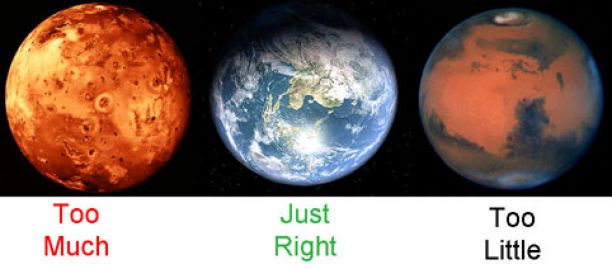
Tidal heating of Io (left) makes it violently volcanic and unsuitable for life (as we know it). Radiogenic heating of the Earth (center) powers geophysical activity that helps maintain our clement climate. Lack of internal heating and geophysical activity for Mars (right) may have contributed to its present lack of a thick atmosphere, making the planet hostile to life.
Tidal heating of Io (left) makes it violently volcanic and unsuitable for life (as we know it). Radiogenic heating of the Earth (center) powers geophysical activity that helps maintain our clement climate. Lack of internal heating and geophysical activity for Mars (right) may have contributed to its present lack of a thick atmosphere, making the planet challenging for life.

Tidal heating of rocky (or terrestrial) extrasolar planets may also span a wide range of values, depending on stellar masses and the planets’ initial orbits. Tidal heating may be sufficiently large (in many cases, in excess of radiogenic heating) and long-lived to drive plate tectonics, similar to the Earth’s, which may enhance the planet’s habitability. In other cases, excessive tidal heating may result in violent volcanism as for Jupiter’s moon Io, probably rendering them unsuitable for life. On water-rich planets, tidal heating may generate subsurface oceans analogous to the ocean in Jupiter’s moon Europa, with similar prospects for habitability. Tidal heating may enhance the outgassing of volatiles, contributing to the formation and replenishment of a planet’s atmosphere. In Jackson+ (2008c), my colleagues and I modeled the tidal heating and evolution of hypothetical extrasolar terrestrial planets to investigate the influence on planetary habitability.

Related Press:

  • Tides Have Major Impact on Planet Habitability – U of AZ press release
  • Talking About Tides – podcast interview with Simon Mitton about tides and planetary habitability

Related Scientific Publications:

  • Jackson+ (2008c). “Tidal Heating of Extrasolar Planets.” ApJ 681, 1631.
  • Jackson+ (2008b). “Tidal heating of terrestrial extrasolar planets and implications for their habitability.” MNRAS 391, 237.
  • Jackson+ (2008). “Tidal Heating of Extrasolar Terrestrial-scale Planets and Constraints on Habitability.” BAAS 40, 391.

Posts navigation

← Tidal Destruction of Extrasolar Planets
Tidal Evolution of Close-in Extrasolar Planets →
  • Recent Posts

    • Free Precession of a Disk
    • Detection of triboelectric discharges during dust events on Mars
    • Metrics for Optimizing Searches for Orbital Precession and Tidal Decay via Transit- and Occultation-Timing
    • First Friday Astronomy – Spring 2026
    • Tidal Evolution of Close-in Extrasolar Planets
  • Archives

    • January 2026
    • December 2025
    • October 2025
    • September 2025
    • August 2025
    • July 2025
    • June 2025
    • May 2025
    • April 2025
    • January 2025
    • December 2024
    • November 2024
    • October 2024
    • September 2024
    • August 2024
    • July 2024
    • June 2024
    • May 2024
    • April 2024
    • March 2024
    • February 2024
    • January 2024
    • December 2023
    • November 2023
    • October 2023
    • September 2023
    • August 2023
    • July 2023
    • May 2023
    • April 2023
    • March 2023
    • February 2023
    • January 2023
    • December 2022
    • November 2022
    • October 2022
    • September 2022
    • August 2022
    • July 2022
    • June 2022
    • May 2022
    • April 2022
    • March 2022
    • February 2022
    • January 2022
    • December 2021
    • November 2021
    • October 2021
    • September 2021
    • August 2021
    • July 2021
    • June 2021
    • May 2021
    • April 2021
    • March 2021
    • February 2021
    • January 2021
    • December 2020
    • November 2020
    • October 2020
    • September 2020
    • August 2020
    • July 2020
    • June 2020
    • May 2020
    • April 2020
    • March 2020
    • February 2020
    • January 2020
    • December 2019
    • November 2019
    • October 2019
    • September 2019
    • August 2019
    • July 2019
    • June 2019
    • May 2019
    • April 2019
    • March 2019
    • February 2019
    • January 2019
    • December 2018
    • November 2018
    • October 2018
    • September 2018
    • August 2018
    • July 2018
    • June 2018
    • May 2018
    • April 2018
    • March 2018
    • February 2018
    • January 2018
    • December 2017
    • November 2017
    • October 2017
    • September 2017
    • August 2017
    • July 2017
    • June 2017
    • May 2017
    • April 2017
    • March 2017
    • February 2017
    • January 2017
    • December 2016
    • November 2016
    • October 2016
    • September 2016
    • August 2016
    • July 2016
    • June 2016
    • May 2016
    • April 2016
    • March 2016
    • February 2016
    • January 2016
    • December 2015
    • November 2015
    • October 2015
    • September 2015
    • August 2015
    • July 2015
    • June 2015
    • May 2015
    • April 2015
    • March 2015
    • February 2015
    • January 2015
    • December 2014
    • November 2014
    • October 2014
    • September 2014
    • August 2014
    • July 2014
    • June 2014
    • May 2014
    • April 2014
    • March 2014
    • February 2014
    • January 2014
    • December 2013
    • November 2013
    • October 2013
    • September 2013
    • August 2013
    • July 2013
Proudly powered by WordPress Theme: Parament by Automattic.